
Toilet Fill Valve Repair in Randolph, MA: Fix or Replace
If your toilet hisses after every flush, refills by itself at night or never quite stops running, the fill valve is the first part to check. It is a small, inexpensive part, and replacing it often takes about thirty minutes.
This guide explains how the valve works, how to tell it from a bad flapper, how to replace it and when a plumber in Randolph is the better call.
What a toilet fill valve does
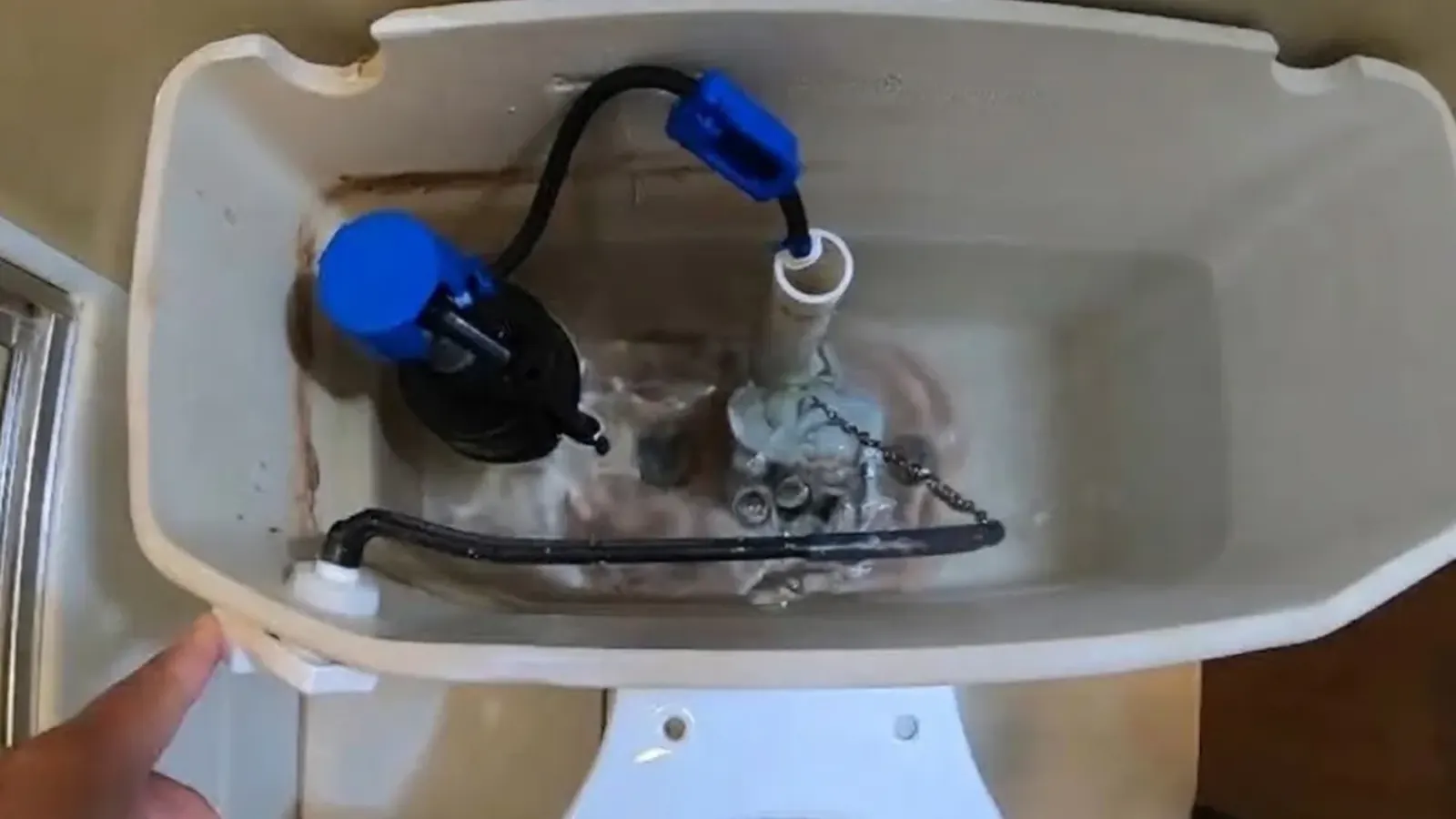
The fill valve sits on the left side of the tank, inside the toilet, and it controls how much water refills the tank after a flush. A float, either a cup that rides up a rod or a ball on an arm, rises with the water level. When the float reaches the set height, it shuts the valve and the water stops.
A second small tube, called the refill tube, sends a little water into the overflow pipe to refill the bowl. If the fill valve does not shut off completely, water keeps trickling past it and down the overflow, which is why a failing valve sounds like a leak you cannot find.
Fill valves are plastic and rubber parts, and they wear out. Water pressure, small debris and years of use stiffen the seals. A typical valve lasts about five to ten years, and many Randolph houses have a valve of that age or older.
Signs the fill valve is failing
Any of these points to the fill valve, but a few overlap with a bad flapper, so read the list through.
- The toilet hisses after the flush is done. A steady hiss means water is still passing the valve seat.
- The tank refills slowly. Debris in the valve or a clogged supply screen reduces flow, and a flush takes minutes to recover.
- Water runs into the overflow tube. If the water level sits above the overflow pipe top, the valve is not shutting off.
- The toilet runs and then stops by itself. A slow leak from the tank to the bowl lowers the level and restarts the valve. That points to the flapper, covered below.
- The float does not move freely. A cup stuck on the rod or an arm that rubs the tank wall keeps the valve open.
Fill valve problem or flapper problem?
Both cause a toilet to run, and the fix is different. A quick dye test tells them apart.
Likely the fill valve
- The toilet hisses, and the water level is too high.
- Water flows over the overflow pipe.
- The tank refills too slowly or too fast.
- The float or cup sticks.
Likely the flapper
- The toilet restarts every few minutes with no flush.
- The water level is normal but drops slowly.
- Food coloring in the tank shows up in the bowl in ten minutes.
- The flapper is warped, cracked or sticky.
Put a few drops of food coloring in the tank and wait ten minutes without flushing. If the bowl shows color, the flapper is leaking. If it does not and the water still runs into the overflow, the fill valve is the culprit.
Toilet still running?
Call the 24/7 line if water is on the floor.
How to replace a toilet fill valve
A standard replacement needs an adjustable wrench, a bucket and a new valve that fits your tank height.
Shut off the water
Turn the angle stop behind the toilet clockwise and flush to empty the tank.
Sponge out the rest
Use a sponge or towel to remove the last water so the tank is dry.
Disconnect the supply
Unscrew the supply line from the base of the fill valve, with the bucket underneath.
Remove the old valve
Loosen the large nut under the tank and lift the valve out.
Set the new valve
Drop in the new valve at the correct height, tighten the nut by hand and a quarter turn more, then reconnect the supply line.
Adjust and test
Turn the water on, set the float so the water stops about one inch below the overflow top and flush to test.
Do not overtighten plastic nuts. A cracked tank is a much bigger repair than a new valve, and a leak from the base means the nut needs a gentle snug, not force.
Common fill valve types
| Type | How it works | Good to know |
|---|---|---|
| Cup float. | The float cup slides up a shaft on the valve. | Most common and easy to adjust. |
| Ball float. | A ball on an arm lifts to close the valve. | Older style, can rub the tank wall. |
| Diaphragm. | A rubber disc controls the flow. | Used in many standard units. |
| Pressure-assisted. | Uses water pressure in a sealed vessel. | A plumber's job to service. |
A Randolph water note that affects toilet parts
Randolph's 2024 drinking water report lists hardness of 39.6 ppm, which is soft. Mineral scale builds slowly in soft water, so a fill valve here is more likely to fail from age or from small debris than from scale. The town advises flushing taps after the water has sat for a while, and a quick flush through the supply line before you install the new valve clears any grit that might clog it.
If you shut off the water for a repair, open a nearby tap afterward to purge air from the line.
Source type: Town of Randolph 2024 Drinking Water ReportWhen to call a plumber
A fill valve swap is a reasonable weekend repair, but there are cases where a plumber is the better call. A corroded angle stop that will not turn, a supply line that is cracked or a toilet with water around its base needs more than a new valve. Forcing a stuck shutoff can break it, and then you have no way to stop the water.
Under the state's plumbing consumer fact sheet, minor repairs like fixing a leaky faucet are exempt from a permit, and a licensed plumber is the right person for work that replaces valves or piping. Our toilet repair team brings fill valves, flappers and angle stops on the truck, and for a faucet or shutoff that is leaking nearby, faucet repair covers it.
If you live in Stoughton or Holbrook, the same service reaches you. See Stoughton and Holbrook for how dispatch works there.
Common mistakes when replacing a fill valve
The most common mistake is buying the wrong valve height. A fill valve has to sit so that its critical level mark, a line stamped on the body, is at least an inch above the top of the overflow tube. If the valve is too tall, it hits the tank lid. If it is too short, it can siphon dirty tank water back into the supply, which a plumber calls backflow.
The second mistake is overtightening. Plastic nuts and tank holes crack under force, and a cracked tank cannot be repaired. Hand tight plus a quarter turn is the rule. The third is forgetting to flush the supply line first. A short blast of water into a bucket before you connect the new valve clears the grit that would otherwise clog its small inlet.
If you find yourself fighting a corroded connection, stop. A stuck nut or a seized shutoff is a plumber's call, and it costs less than a new tank or a flooded bathroom.
Toilet fill valve questions from Randolph homeowners
A toilet that runs continuously can waste hundreds of gallons a day, and a meter that runs with the taps off is one of the first signs.
A worn valve seat or high water pressure causes whistling or hissing. A new valve usually quiets it.
Yes. Many cup-float valves have a clip or screw that sets the water level, and it takes a few seconds to try.
Older tanks may be taller or shorter than modern ones. Match the valve's height range to the tank.
A slow run is not an emergency. Water on the floor or an overflow is, and the 24/7 line handles those.
Still unsure which fix fits? A dispatcher can talk it through on the 24/7 line at (508) 389-4045.