
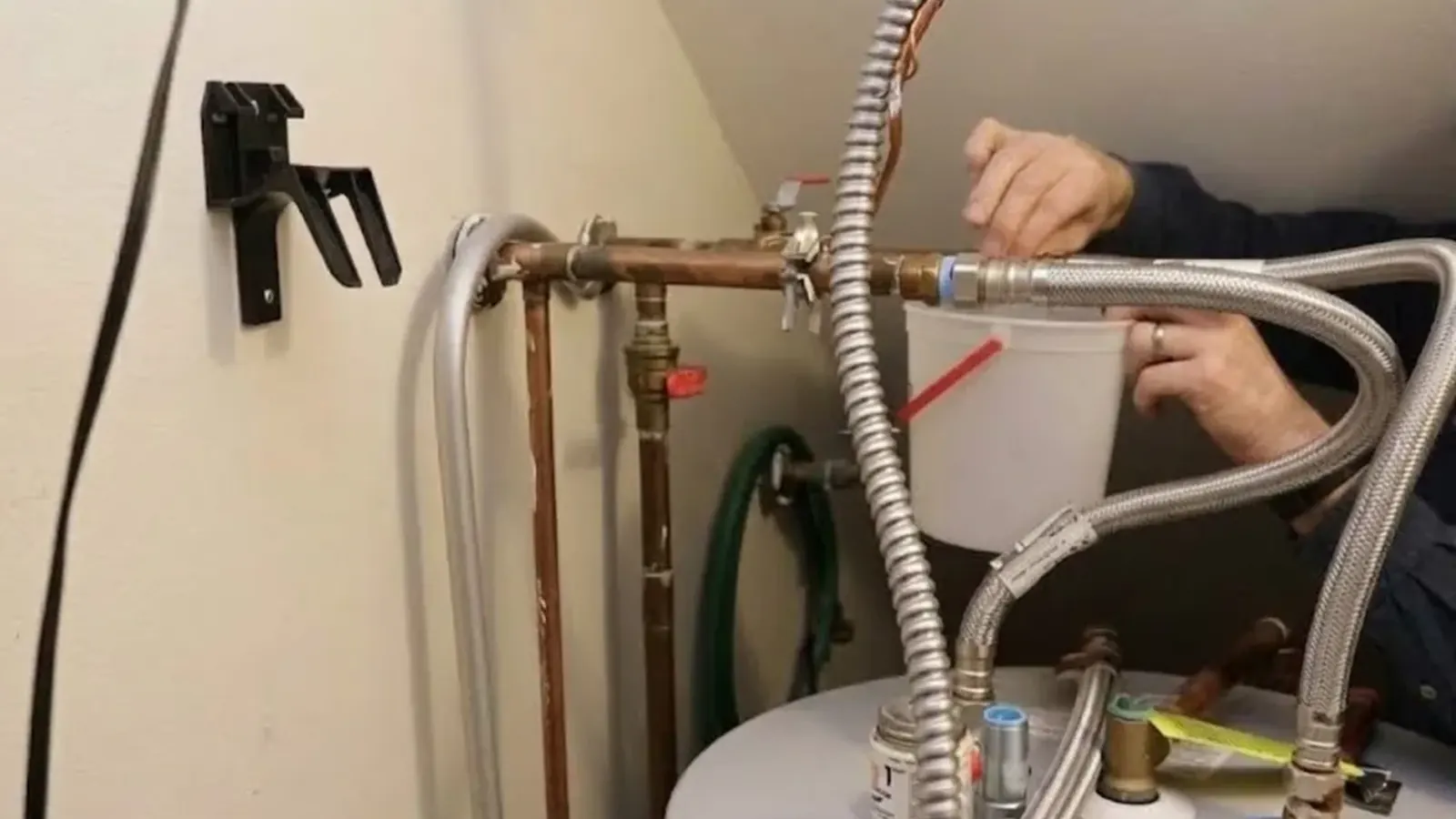
Gas Water Heater Thermostat Replacement in Randolph, MA
A gas water heater does not have a separate thermostat the way an electric one does. The temperature control, the pilot and the gas valve live in one part called the gas control valve, and when it fails the heater can run cold, run too hot or not light at all.
This guide explains what that part does, how to tell it from simpler faults, and why Massachusetts treats its replacement as licensed gas work.
What the thermostat on a gas water heater really is
On most residential gas tank heaters, a dial near the bottom of the tank sets the water temperature. Behind the dial sits a thermostat probe that reaches into the tank, and the dial and probe are built into the gas control valve. That valve opens the gas to the burner when the water cools, closes it when the water is hot enough and keeps the pilot safe.
Because the control valve combines temperature control and gas safety, a failure can look like several different problems. Water that never gets hot, water that scalds and a pilot that will not stay lit can all trace back to this one part, or to a cheaper part next to it.
Thermocouple or thermopile
A small probe sits in the pilot flame. It produces a tiny current that holds the gas valve open. A weak or dirty thermocouple is the most common reason a pilot will not stay lit, and it is much cheaper than the control valve.
Electronic ignition models
Newer heaters use an igniter instead of a standing pilot. They have a control board and a flame sensor, and error lights on the unit help point to the fault.
Symptoms and the likely part
| Symptom | Likely cause | What it usually takes |
|---|---|---|
| Pilot will not stay lit. | Dirty or failing thermocouple, drafty vent. | Clean or replace the thermocouple, check the vent. |
| Water never gets hot. | Pilot out, failed gas valve or sediment. | Relight, test the valve and flush the tank. |
| Water far too hot. | Stuck thermostat or a failed control valve. | Replace the control valve. |
| Water lukewarm. | Low thermostat setting or a bad dip tube. | Adjust the dial, then test the dip tube. |
| Rumbling and a gas smell. | Sediment and a possible gas leak. | Leave the house and call 911 for any gas smell. |
A gas smell is never a do-it-yourself problem. Leave the house, stay out and call 911 before you call a plumber.
Why this is licensed gas work in Massachusetts
Gas fitting in Massachusetts must be done by a licensed gas fitter, and a licensed plumber may also do gas work. The state's plumbing consumer fact sheet says a gas fitter may not do plumbing work, but a plumber may do gas fitting. The control valve is a gas appliance part, so replacing it is not a homeowner job.
The fact sheet also says a permit is required before plumbing is installed, altered, removed, replaced or repaired, and that only a licensed plumber can pull it. Randolph's building department issues permits at 41 South Main Street, and the plumbing inspector works Mondays, Wednesdays and Thursdays. Calls to schedule an inspection should be placed before 9 a.m.
Gas smell or no hot water?
If you smell gas, leave first and call 911. Then call us.
Replace the control valve or the whole heater?
Replacing the control valve makes sense when
- The tank is under about ten years old.
- There is no leak from the shell or the base.
- The anode rod and tank are in good shape.
- The valve is the only failed part.
Replacing the heater makes sense when
- The tank is 12 years old or more.
- The valve and the tank are both failing.
- The repair cost nears the cost of a new heater.
- There is rust or water around the base.
Many plumbers will tell you the repair makes sense only on a newer tank. Our water heater repair page explains how we decide, and water heater replacement covers what happens when the tank is finished.
What a replacement visit involves
Safety check
The plumber checks the vent, the gas connection and the room for leaks.
Shut off gas and water
Both supplies are closed and the tank is partly drained.
Remove the old valve
The valve is unscrewed, and the thermostat probe is removed from the tank.
Install and test the new valve
A new valve is set, gas connections are leak-tested, and the pilot is lit.
Check the draft
We confirm that the flue draws properly and that the burner flame is steady.
A Randolph note on water temperature
Many Randolph houses have a heater set at the factory default. A higher setting wastes fuel and raises scald risk. A setting near 120 degrees Fahrenheit is a common guideline for households, and homes with young children or elderly residents often set it there on purpose.
Randolph's water is soft, with 39.6 ppm of hardness in the town's 2024 report, so scale is a slower problem here than in many towns. A tank that rumbles is more often an age and sediment issue than a mineral buildup issue.
Source type: Town of Randolph 2024 Drinking Water Report and general plumbing practiceWhen to call
If your pilot will not stay lit, you can try relighting it by the manufacturer's instructions once. If it goes out again, or if the water is scalding, stop and call. A part that controls gas should be handled by a licensed professional.
If you live in Holbrook or Avon, our dispatch covers you too. See Holbrook and Avon. A heater that has no hot water at night is a priority call on the 24/7 line.
Safety features on a gas water heater
A gas water heater has several layers of protection, and it helps to know what they are. The thermocouple shuts the gas off if the pilot goes out. The temperature and pressure relief valve opens if the tank gets too hot or the pressure too high. A flame arrestor on many newer models keeps flammable vapors from igniting near the burner.
These parts exist because gas appliances can fail dangerously. Bypassing a safety device, jamming a relief valve closed or wiring around a failed control is never a repair. If a safety part keeps tripping, the right answer is to find out why, not to defeat it.
Carbon monoxide is the other concern. A heater that is venting poorly can spill exhaust into the house. A working carbon monoxide detector on each level and near sleeping areas is a basic precaution for any home with a fuel-burning appliance.
Gas water heater questions from Randolph homeowners
In Massachusetts, gas work is licensed work, so the control valve should be replaced by a licensed plumber or gas fitter.
Many households use about 120 degrees Fahrenheit. A plumber can set it for you.
A dirty or weak thermocouple, a drafty vent or a failing control valve can all cause it.
The part costs more than a thermocouple, which is why the plumber tests the simple parts first.
Typically around ten to twelve years, and sooner if maintenance is skipped.
Still unsure which fix fits? A dispatcher can talk it through on the 24/7 line at (508) 389-4045.